How to Split a Restaurant Bill Fairly (Without Awkward Conversations)
7 min read

Few things ruin the end of a great dinner faster than figuring out who owes what.
One person ordered a salad. Another had a steak and two cocktails. Someone shared an appetizer. Another person arrived late and only ordered dessert. Yet when the bill arrives, someone inevitably says:
“Should we just split it evenly?”
While equal splitting sounds simple, it is rarely fair.
In this guide, you’ll learn the best ways to split a restaurant bill, when each method makes sense, and how modern AI-powered tools can eliminate the awkward math entirely.
Why Restaurant Bills Become Complicated
At first glance, dividing a bill sounds easy.
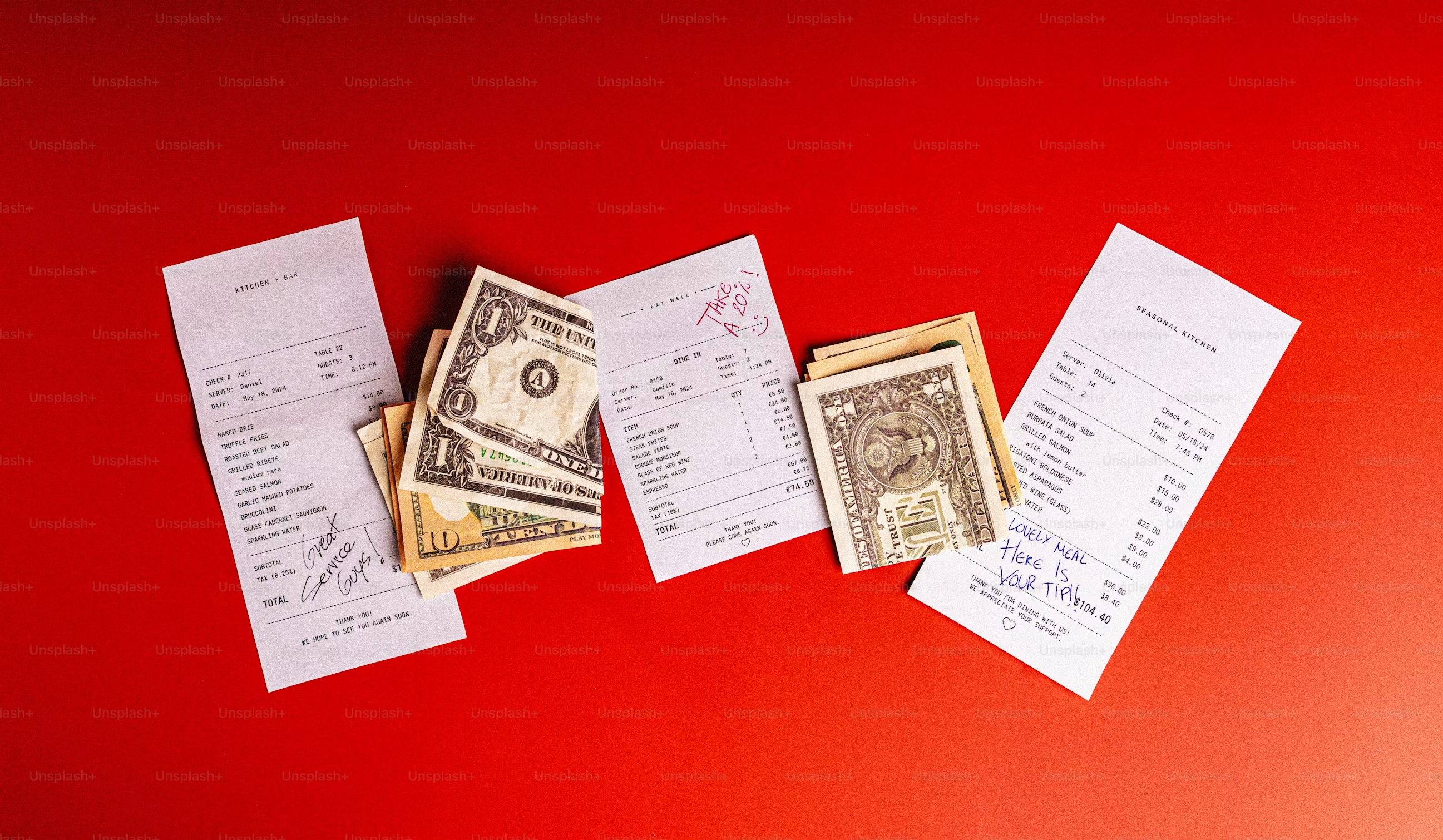
However, most restaurant checks include much more than just food prices:
- shared appetizers
- drinks ordered by only some people
- taxes
- service charges
- tips
- discounts
- multiple quantities of the same item
A $120 dinner for four people can quickly turn into ten minutes of calculations.
This is why restaurant bill splitting apps have become increasingly popular in recent years. More people are looking for faster and fairer ways to settle expenses without creating uncomfortable situations.
Method 1: Split the Bill Equally
The simplest approach is to divide the total amount by the number of people.
Example
- Total bill: $120
- People: 4
- Each person pays: $120 ÷ 4 = $30
Pros
Why people like it
- Fast
- No calculations
- Works well when everyone ordered similar amounts
Cons
Why it fails
- Often unfair
- Light eaters subsidize bigger spenders
- Can create frustration in larger groups
Equal splitting is usually best for close friends who ordered roughly the same amount.
Method 2: Pay Only for What You Ordered
A more accurate approach is itemized bill splitting.
Each person pays for:
- their own food
- their own drinks
- a proportional share of taxes and tips
Example
Sarah ordered:
- Pasta — $16
- Soda — $3
- Total: $19
Michael ordered:
- Steak — $32
- Cocktail — $12
- Total: $44
Clearly, splitting the bill equally would not be fair. This method is the most accurate but becomes difficult when many people share dishes.
Method 3: Split Shared Items Separately
Many restaurant visits involve shared expenses:
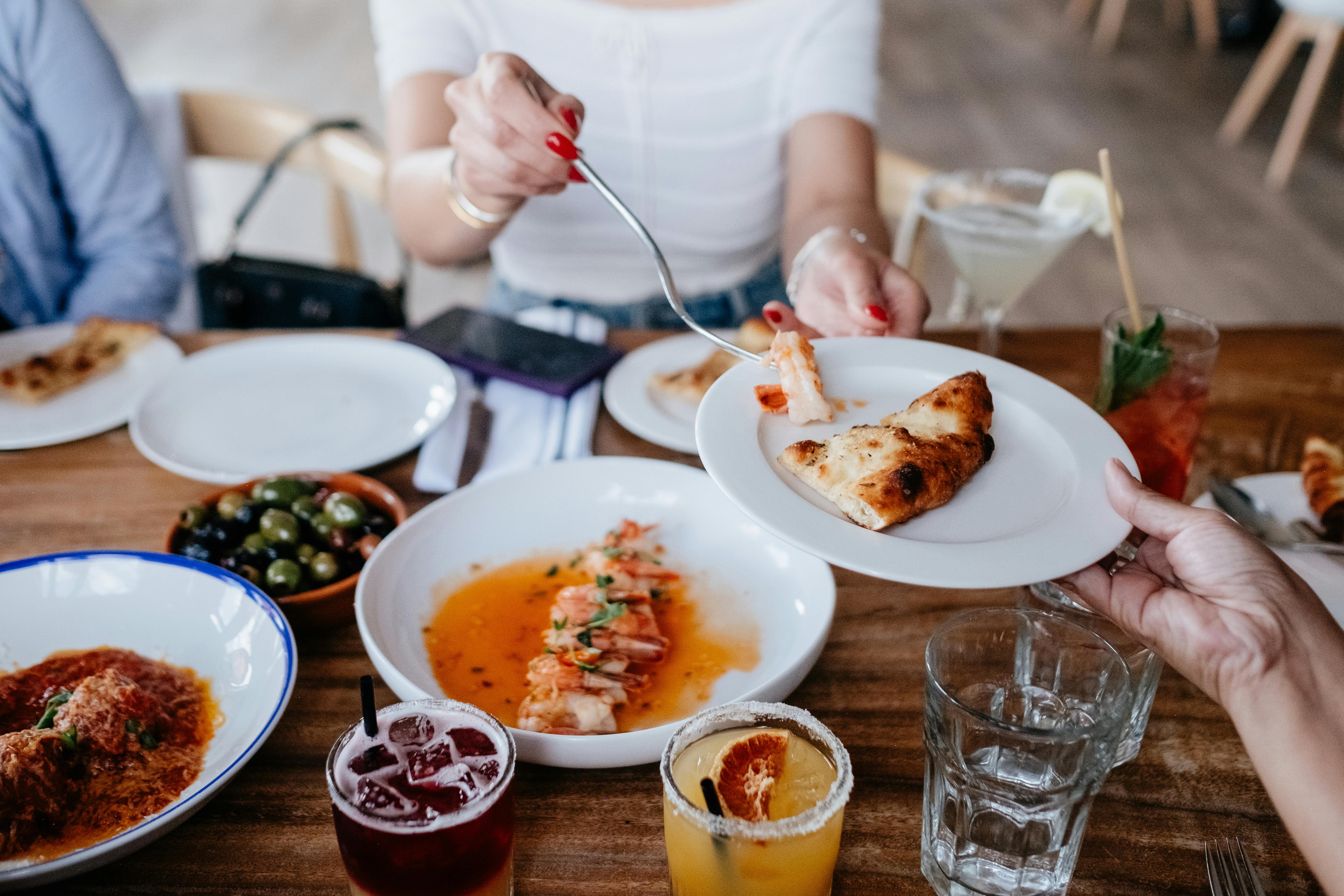
- appetizers
- desserts
- bottles of wine
- family-style dishes
In this case:
- Assign individual items to each person.
- Divide shared items equally among participants.
- Add tax and tip proportionally.
While fair, doing this manually can be time-consuming.
The Traditional OCR Problem
Many bill-splitting apps use OCR (Optical Character Recognition) to scan receipts. OCR converts an image into text.
The problem is that restaurant receipts are messy:
- crumpled paper
- faded ink
- unusual layouts
- abbreviations
- poor lighting
OCR can read characters, but it often struggles to understand what those characters mean. This can lead to misplaced prices, missing quantities, and incorrect item assignments.
How AI Makes Bill Splitting Easier
Modern AI systems work differently. Instead of simply reading characters, AI understands the structure of a receipt.
A modern AI receipt scanner can identify:
- item names
- quantities
- unit prices
- subtotals
- taxes
- tips
- total amount
Even when the receipt format is unfamiliar, AI can often understand the context and organize the information into structured data. This dramatically reduces the amount of manual correction required.
Using AI to Split Restaurant Bills
This is exactly the problem that Who Owes Whom Restaurants was designed to solve.

Instead of manually entering every item, users can:
- Take a photo of the receipt.
- Let AI analyze the bill.
- Automatically extract items and prices.
- Assign items to people.
- Instantly see who owes what.
Because the system uses AI-powered receipt understanding, it can handle many receipt formats that traditional OCR-based tools struggle with. The result is faster bill splitting, fewer mistakes, and a much smoother experience after a meal.
When Should You Use a Bill Splitting App?
A bill splitting app becomes especially useful when:
- dining with 4+ people
- splitting restaurant checks frequently
- traveling with friends
- organizing group events
- sharing family-style meals
- managing mixed food and drink orders
The larger the group, the more time an automated solution can save.
Common Bill Splitting Mistakes
Ignoring Taxes Many people divide only the food items and forget taxes.
Forgetting Shared Dishes Appetizers and desserts should be distributed fairly.
Splitting Equally When Orders Differ Greatly Equal splitting is convenient but often creates resentment.
Manual Calculator Errors The more people involved, the easier it is to make mistakes.
Frequently Asked Questions
What is the fairest way to split a restaurant bill? The fairest method is itemized splitting, where each person pays for what they ordered plus their share of taxes, tips, and shared items.
Is it okay to split a bill evenly? Yes, if everyone ordered similar amounts. Otherwise, itemized splitting is usually more accurate.
How do apps split restaurant bills? Modern apps either use OCR or AI to scan receipts, identify items, and calculate what each person owes. AI-based systems generally understand receipt structure better than traditional OCR solutions.
What is the easiest way to divide a restaurant check? Using an AI-powered receipt scanning app is usually the fastest and most convenient option.
Final Thoughts
Splitting a restaurant bill should not be the most complicated part of dinner.
While equal splitting works in some situations, itemized bill splitting is usually the fairest approach. Modern AI-powered receipt recognition makes the process dramatically faster by automatically identifying items, prices, taxes, and totals.
Instead of spending ten minutes doing math at the table, you can focus on enjoying time with friends and let technology handle the calculations.
Split your next bill with AI

