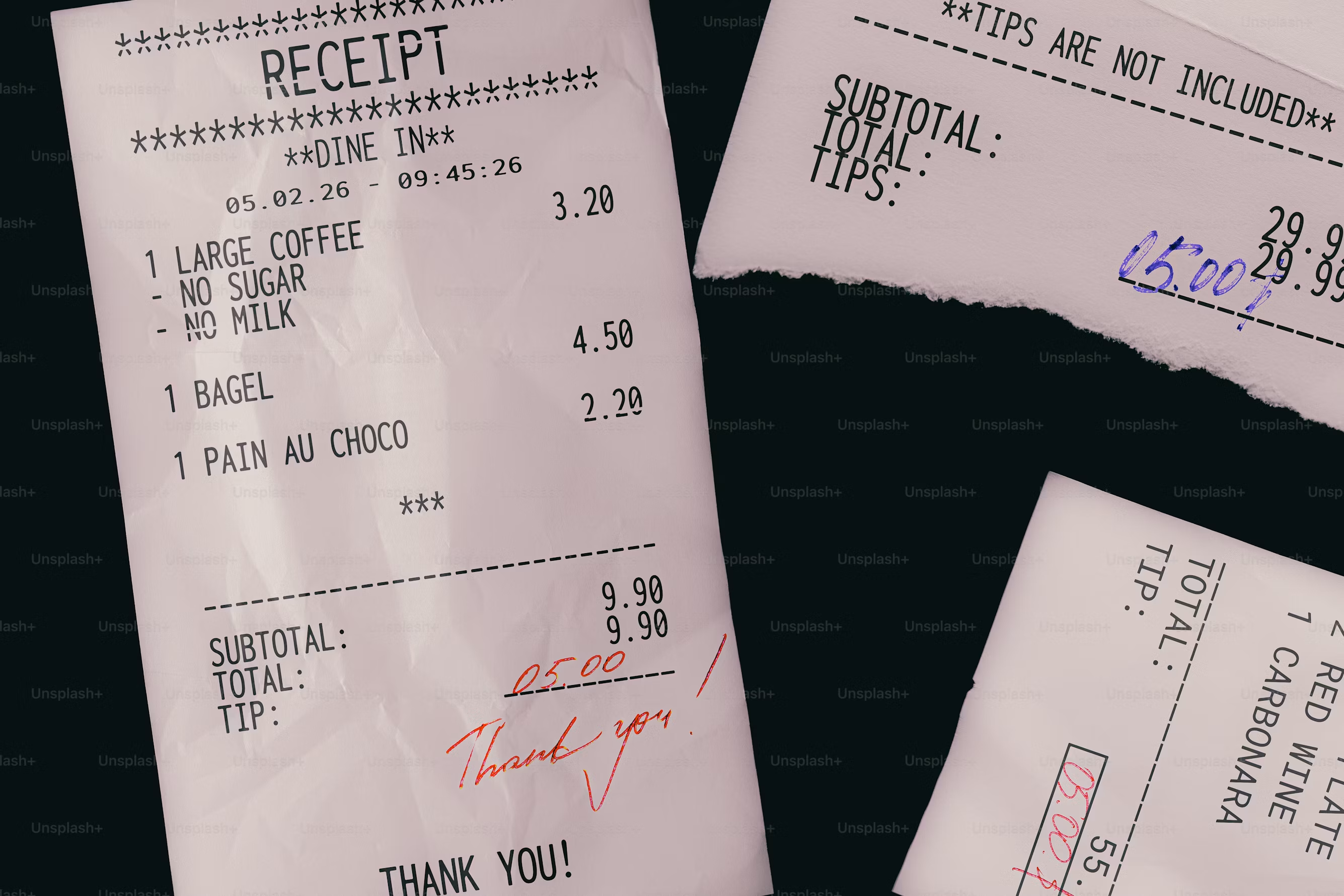
OCR, or optical character recognition, is designed to convert text from an image into machine-readable text. It is useful, but it has one major limitation: OCR mainly reads characters, while a restaurant receipt is much more than a block of text.
It contains structure, layout, item groups, totals, discounts, tips, taxes, and sometimes multiple languages or currencies. That is exactly where AI-based receipt understanding becomes stronger.
Who Owes Whom Restaurants uses a Gemini-powered AI approach to recognize receipts in a way that is much closer to how a human would read them. Instead of only extracting text line by line, the AI understands the receipt as a whole, identifies the format, finds item names, quantities, unit prices, subtotals, taxes, and total amounts, and turns the result into structured data that is ready for bill splitting. For restaurant expense splitting, this difference matters a lot.
Why OCR Often Breaks Down on Receipts
OCR is excellent when the goal is simple text extraction. But receipts are a difficult document type.
A restaurant receipt may include:
- very small or faded text
- slanted camera angles
- poor lighting
- folded paper
- thermal printing artifacts
- mixed fonts and spacing
- abbreviations and shorthand item names
- grouped sections for drinks, food, discounts, taxes, and tips
OCR can read the characters, but it does not always understand what they mean. That creates problems such as item names being split incorrectly, quantities being lost, prices being assigned to the wrong line, totals being confused with subtotals, and tax and tip being merged into the wrong category.
💡 For a simple scan-to-text task, OCR is enough. For splitting a restaurant bill fairly, it is often not enough.
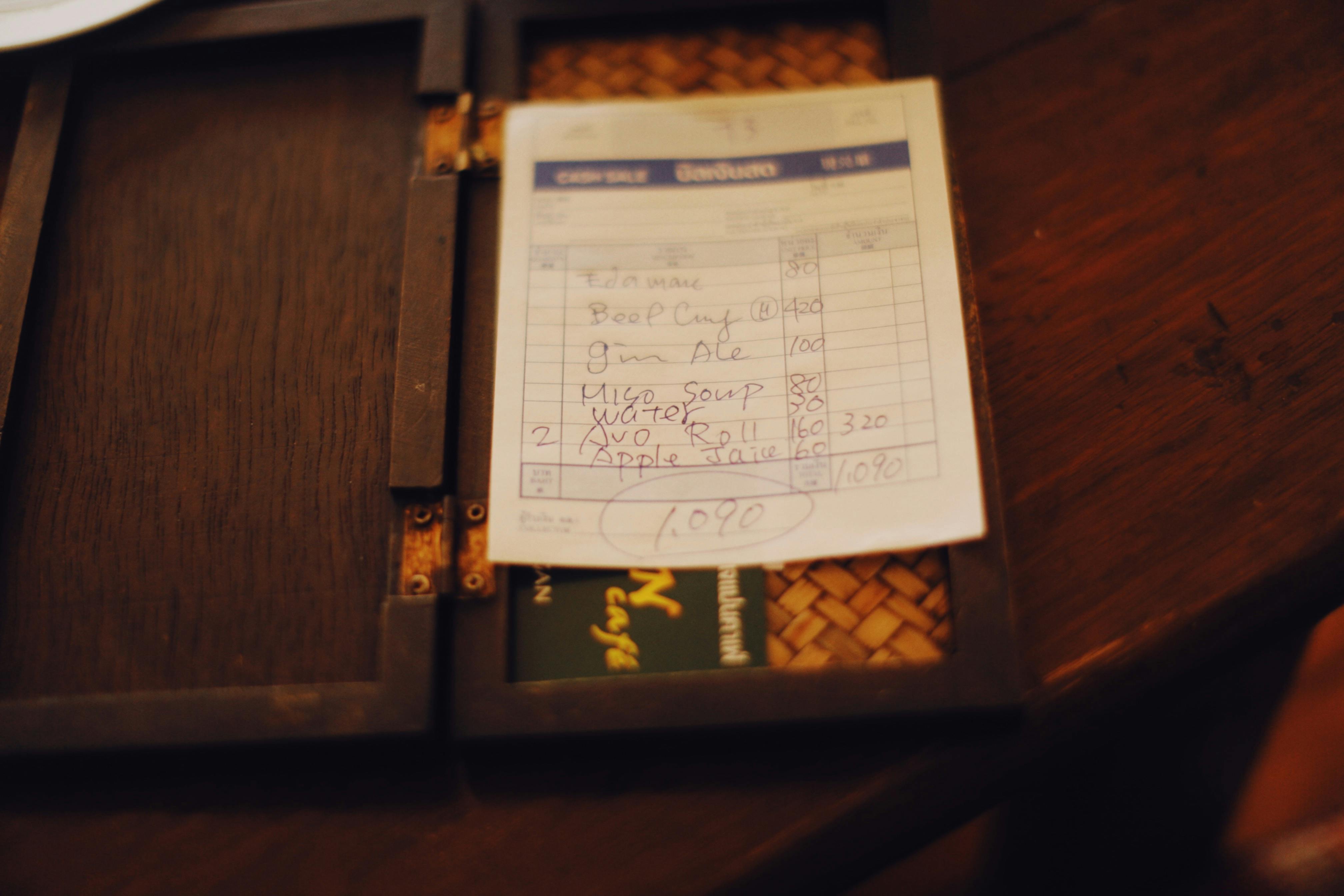
Real-world receipts are often messy, wrinkled, and poorly lit.
Why AI Can Understand Receipts Better
AI-based receipt recognition is different because it does not only see characters. It interprets structure.
A modern multimodal model can look at the receipt and understand:
- what section is the item list
- which numbers are quantities
- which values are unit prices
- which line is a subtotal
- which line is tax
- which line is a tip
- which items belong together
That means the system is not just reading text. It is reading context.
This is especially important for receipts, because human readers do not process receipts character by character. They naturally interpret layout, labels, spacing, and visual grouping. AI is much closer to that behavior than traditional OCR.

What This Means Inside Who Owes Whom Restaurants
Who Owes Whom Restaurants is designed specifically for one real-world job: making restaurant bill splitting fast, fair, and painless.
Instead of forcing the user to manually clean up OCR output, the app can use AI to understand the receipt more intelligently and extract the important fields automatically. That gives you a much better workflow:
- Take a photo of the receipt.
- AI reads the receipt structure.
- Item names, quantities, and prices are extracted.
- The app prepares the bill for splitting.
- You assign people or let the app help with the breakdown.
- Everyone sees who owes what.
This is a much smoother experience than copy-pasting a raw OCR dump and fixing broken lines by hand.
AI vs OCR: The Practical Difference
Standard OCR
"What text is on this receipt?"
COKE 3.00
TAX 1.50
TOTAL 16.50
AI Recognition
"What does this receipt mean, and how should it be split?"
- Burger and coke are separate items
- The total belongs to the whole check
- Tax should be included in the final split
That means less editing, fewer mistakes, and faster bill splitting.
FAQ
Is AI better than OCR for receipt scanning?
For restaurant bill splitting, yes in many cases. OCR extracts text, while AI can understand receipt structure and help identify items, quantities, and prices more intelligently.
Why is receipt recognition difficult?
Receipts are small, noisy, and visually complex. They often contain multiple totals, taxes, tips, abbreviations, and tightly packed text.
What does Who Owes Whom Restaurants do differently?
It uses AI-based receipt understanding to interpret the receipt more intelligently and help prepare a fair bill split.
Is OCR still useful?
Yes. OCR is still useful for basic text extraction. But for receipt splitting, AI-based understanding is often a better user experience.
Experience Smart Receipt Splitting

